
Searching for a long-lost brother or sister can feel like looking for a needle in a haystack of digital records. Traditional search engines often fail because they rely on exact text matches, missing variations in spelling, married names, or nicknames.
However, in 2026, the landscape of family reunification has changed. By using a specialized Sibling Matcher powered by artificial intelligence, you can bridge the gaps that once kept families apart.
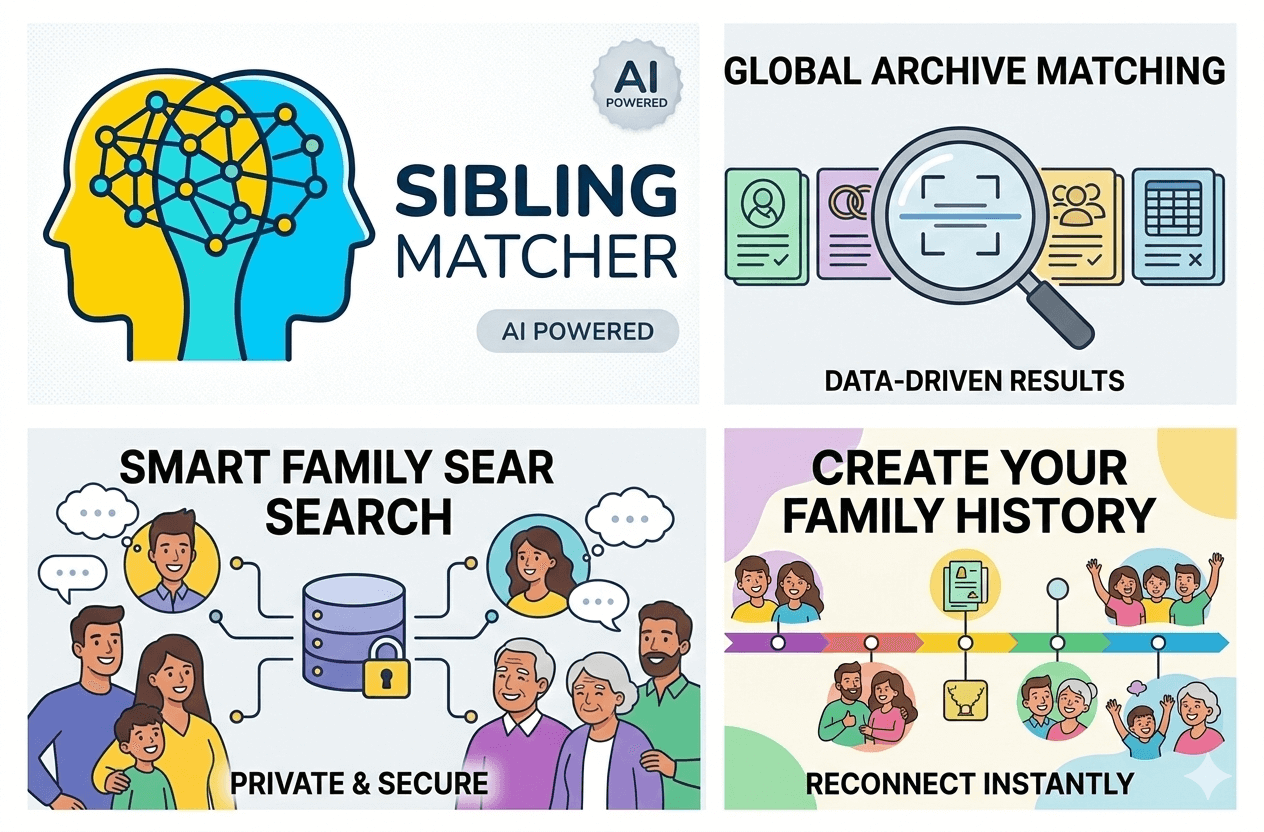
Why Traditional Searches Fail
Most people begin their journey by typing a name into a social media search bar. The problem? Human names are fluid. A sibling born “Catherine” might go by “Kate,” or they may have changed their surname following a marriage or adoption.
Standard search tools use “fuzzy matching,” which catches simple typos but fails to understand the semantic relationship between names. This is where AI-driven sibling matching technology steps in to solve the “identity puzzle.”
Key Resources for Your Search
Before diving into AI matching, it helps to cross-reference with established public databases. Here are three essential resources to help build your search profile:
- National Archives Genealogy Research: Excellent for finding older census records and birth certificates.
- FamilySearch: A massive, free repository of international records that can provide the “seed data” for an AI search.
- International Soundex System: A phonetic algorithm used by archives to group names that sound alike but are spelled differently.
The Power of AI in Sibling Matching
Unlike basic databases, an AI-powered sibling matcher uses Machine Learning (ML) to analyze more than just a string of letters. Here is how it works:
- Phonetic Algorithms: The tool recognizes that “Stephen” and “Steven” are likely the same person, even if spelled differently.
- Cross-Platform Data Aggregation: It scans disparate records—from public archives to social signals—to find clusters of data that point to a single individual.
- Relationship Mapping: By analyzing “mutual connections” or “shared geographic history,” the AI can calculate the probability that two people are related.
Step-by-Step: Using a Sibling Matcher Tool
If you are ready to take your search to the next level, follow these steps to maximize your results:
- Input Known Details: Enter the full birth name, approximate age, and last known location.
- Leverage Sibling-Specific Filters: Use the tool to look for “potential siblings” based on parental names or shared childhood addresses.
- Analyze Similarity Scores: AI tools often provide a “confidence percentage.” A score above 85% is a strong lead that warrants further investigation.
- Verify with Public Records: Once the matcher identifies a lead, the tool often provides links to public records or social profiles to confirm the connection.
DNA vs. Digital Matching: Which is Better?
While DNA testing kits (like 23andMe or Ancestry) are highly accurate, they require the other person to have also taken a test.
| Feature | DNA Testing Kits | AI Sibling Matcher Tools |
| Requirement | Both parties must test | Publicly available data |
| Speed | 4–6 weeks for lab results | Instant digital results |
| Privacy | Biological data required | Uses public digital footprint |
| Cost | Often $99+ | Often free or low-cost |
The Verdict: AI matching is the perfect first step for those who don’t have access to DNA or want to start their search immediately and discreetly.
Privacy and Ethics in 2026
When using a sibling matcher, it is vital to respect privacy. AI tools are designed to help you find information that is already in the public domain. When you finally make contact, remember to be patient and empathetic—finding a biological relative is an emotional journey for everyone involved.
Conclusion: Reconnect Today
The technology to find your family has never been more advanced. You no longer have to rely on luck or expensive private investigators. By understanding how to find biological siblings with AI name matching, you can turn a cold trail into a warm reunion.
Ready to find your missing piece? Try our Sibling Matcher Tool today and see who is waiting to be found.
Frequently Asked Questions (FAQ)
1. How does AI name matching find siblings that search engines miss? Traditional search engines look for exact character strings. AI name matching uses Natural Language Processing (NLP) to understand that names like “Robert,” “Bob,” and “Robbie” represent the same person. It also analyzes historical data clusters, such as shared addresses or maiden names, to identify connections that aren’t explicitly linked online.
2. Can I find a biological sibling if I only have their birth name? Yes. An AI-powered Sibling Matcher scans public archives, social signals, and registry data to track name changes over time. By cross-referencing a birth name with marriage records or professional directories, the tool can often identify a person’s current legal name and location.
3. Is using a Sibling Matcher faster than a DNA test? Significantly. While DNA kits provide biological certainty, they often take 4–6 weeks for laboratory processing and require the other person to be in the same database. An AI matching tool provides instant results by aggregating existing digital footprints and public records.
4. Is it legal and private to search for relatives using AI? Yes, provided the tool uses publicly available data. Our Sibling Matcher is designed to comply with modern privacy standards like GDPR and CCPA, ensuring that only data within the public domain or authorized registries is used for the search. It is a non-invasive way to begin a family search.
5. What information do I need to start a search? To get the most accurate results, it is best to provide:
- The sibling’s full birth name.
- An approximate age or birth year.
- A last known location (city or state).
- Names of biological parents, if known.
- Trailies Reviews: Is the Body Safety System Worth It for Parents?
- How to Stop Toddler Meltdowns Without Yelling (As a Dad Who Lost His Temper)
- The Modern Parent’s Guide: How to Best Help Your Unemployed Adult Child
- Baby Daybook Tracker: The Ultimate Offline Routine & Health Log for Parents
- The Ultimate Guide to Elegant Luxury Baby Girl Names with Rich Meanings


