The “invisible labor” of parenting—managing schedules, tracking milestones, and researching every minor developmental hiccup—has reached a breaking point. In 2026, the modern parent is no longer expected to carry this weight alone. We have entered the era of the AI Co-Parent, a shift where artificial intelligence moves from a novelty to a functional partner in mental load management.
The Mental Load: The Unseen Parenting Crisis
Before we dive into the solutions, we must address the problem. The “mental load” refers to the cognitive effort involved in running a household and raising children. It’s the constant internal monologue: “Did I pack the snack? When is the next pediatrician appointment? What should we name the new baby to ensure it sounds right with the older sibling?”
This cognitive burden is a leading cause of parental burnout. However, AI is now stepping in as a digital executive assistant, helping parents reclaim their time and mental clarity.
Redefining the Search for the Perfect Name
One of the earliest and most significant stressors in the parenting journey is choosing a name. It is a decision that lasts a lifetime and often involves months of debate, research, and compromise. Traditional baby name books are static and overwhelming, but AI has transformed this into a dynamic, personalized experience.
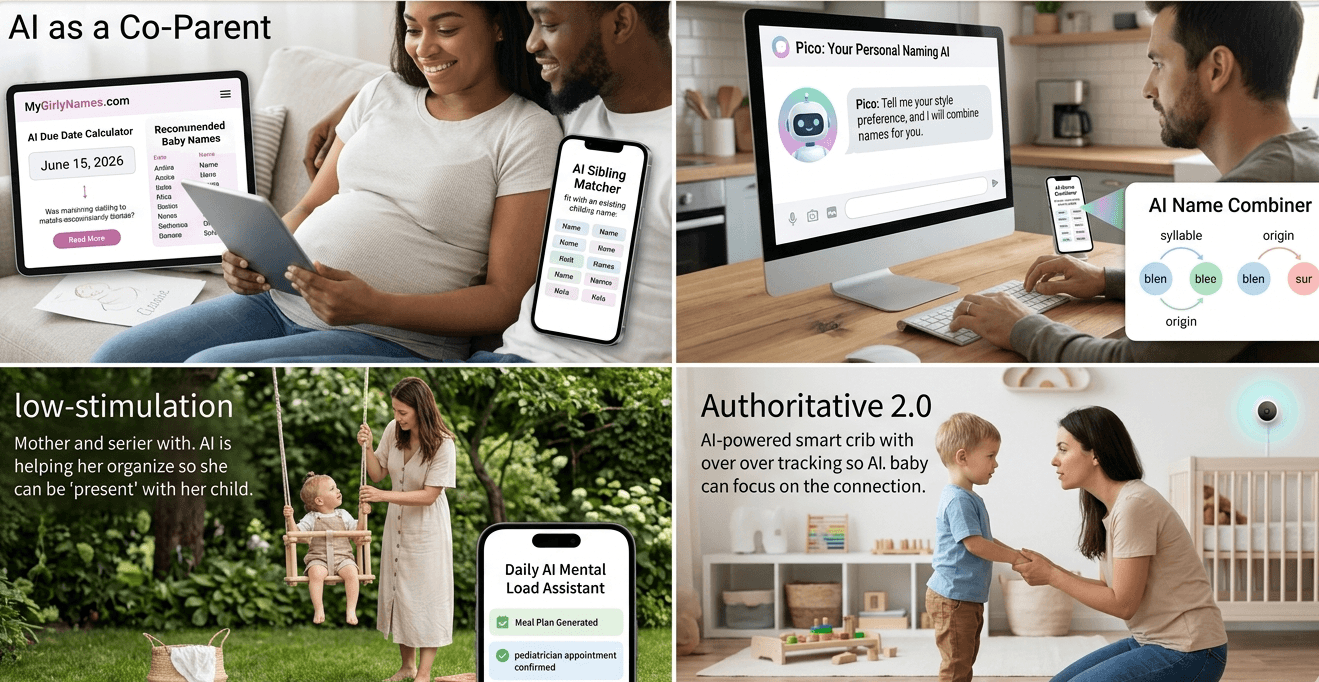
Platforms like mygirlynames.com are at the forefront of this revolution, offering a suite of specialized AI tools designed to eliminate the friction of naming:
- AI Name Finder: Instead of scrolling through endless alphabetical lists, parents can use AI to filter by vibe, origin, and meaning, delivering a curated list that actually resonates.
- The Name Combiner: For parents who want to honor multiple family members or blend two distinct heritages, the AI Name Combiner creates unique, melodic hybrids that feel intentional rather than forced.
- Sibling Matcher: A common stressor for second-time parents is finding a name that “fits” with their first child. The AI Sibling Matcher analyzes linguistic patterns and styles to suggest names that create a cohesive family identity.
- Pico: Your Personal Naming AI: Perhaps the most innovative feature is Pico, a dedicated AI chatbot. Pico acts as a sounding board—parents can chat with Pico about their preferences, and the bot uses advanced logic to suggest, combine, and refine names in real-time. It’s like having a baby-naming consultant available 24/7.
Planning for the Big Day: The AI Due Date Calculator
Mental load management begins long before the baby arrives. Tracking pregnancy milestones and preparing for the arrival requires precise planning. The AI tools at mygirlynames.com include sophisticated due date predictors that help parents visualize their timeline, allowing them to coordinate work leave, nursery setups, and family visits with confidence.
How AI Manages the Day-to-Day “Invisible Labor”
Beyond naming and birth planning, AI is integrating into the daily “co-parenting” flow in three distinct ways:
1. Administrative Automation
The modern school-aged child comes with a mountain of paperwork. AI tools can now scan school flyers, extract dates, and automatically populate family calendars. Parents are using AI to draft emails to teachers or coaches, transforming a 20-minute chore into a 30-second approval.
2. Nutritional Intelligence
“What’s for dinner?” is a question that haunts every parent. AI co-parents can now generate weekly meal plans based on what is currently in the fridge, accounting for allergies, picky eaters, and nutritional requirements. This eliminates the “decision fatigue” that plagues the late afternoon hours.
3. The “Expert” in Your Pocket
When a baby won’t stop crying or a toddler develops a mysterious rash, the first instinct is often a frantic, anxiety-inducing search. AI-driven parenting assistants provide grounded, evidence-based information derived from pediatric databases, offering calm guidance before the parent even calls the doctor.
The Shift to Authoritative 2.0
The use of AI as a co-parent supports the trending Authoritative 2.0 parenting style. By offloading the logistical “noise”—the scheduling, the naming debates, and the meal planning—parents have more emotional bandwidth to be present.
When the mental load is lightened, parents can focus on what truly matters: building a secure, empathetic connection with their children. They are no longer just “managers” of a household; they are leaders of a family.
Why “Analog” and “Digital” Must Coexist
While AI handles the digital and logistical heavy lifting, there is a parallel trend toward “Analog Childhoods.” Parents are using the time saved by AI to engage in low-stimulation play, outdoor exploration, and screen-free bonding.
The paradox of 2026 is that we are using high-tech tools to facilitate a low-tech lifestyle. We use AI to find the perfect name on mygirlynames.com so we can spend less time on our phones and more time whispering that name to a newborn.
Conclusion: A Partnership for the Future
AI is not replacing the parent; it is protecting the parent. By managing the mental load, tools like the Pico chatbot and the AI Name Combiner allow caregivers to move from a state of “surviving” to “thriving.”
In the complex landscape of 2026, the most successful parents are those who treat technology as a teammate. Whether you are in the early stages of pregnancy using a due date calculator or deep in the naming process with a sibling matcher, remember that you don’t have to carry the burden alone. The AI co-parent is here to stay, and the mental health of the modern family is better for it.
Latest Post :
- How to Stop Toddler Meltdowns Without Yelling (As a Dad Who Lost His Temper)
- The Modern Parent’s Guide: How to Best Help Your Unemployed Adult Child
- Baby Daybook Tracker: The Ultimate Offline Routine & Health Log for Parents
- The Ultimate Guide to Elegant Luxury Baby Girl Names with Rich Meanings
- AI as a Co-Parent: How Artificial Intelligence is Solving Parental Burnout in 2026