
It’s 7:15 AM. You’re already running late for work, and your three-year-old is face-down on the kitchen floor screaming like their soul is leaving their body. The cause? You cut their toast into triangles instead of squares.
Your heart rate spikes. Your jaw clenches. You feel that hot surge of frustration rising straight into your chest. Every instinct in your body wants to yell: “JUST EAT THE TOAST!”
If you’ve been there, you aren’t a bad father. You’re human. But if you’re reading this, you’re also part of a growing movement of modern dads trying to break the cycle. You don’t want to be the dad who rules by fear or loses his cool over ruined breakfasts, public tantrums, or bedtime standoffs.
Here is the exact framework to defuse a full-blown toddler meltdown without shouting, backed by child psychology and tested in real-world dad scenarios.
1. The Physics of a Meltdown: Why Yelling Always Backfires
When a toddler enters a full meltdown, their amygdala—the brain’s alarm system—takes complete control. According to neuroscientists at the Harvard University Center on the Developing Child, their prefrontal cortex (the part responsible for logic, reasoning, and executive functioning) goes entirely offline during high-stress states.When you raise your voice, your toddler’s nervous system registers you as an active threat. Reasoning with a child in fight-or-flight is impossible—body first, brain second.
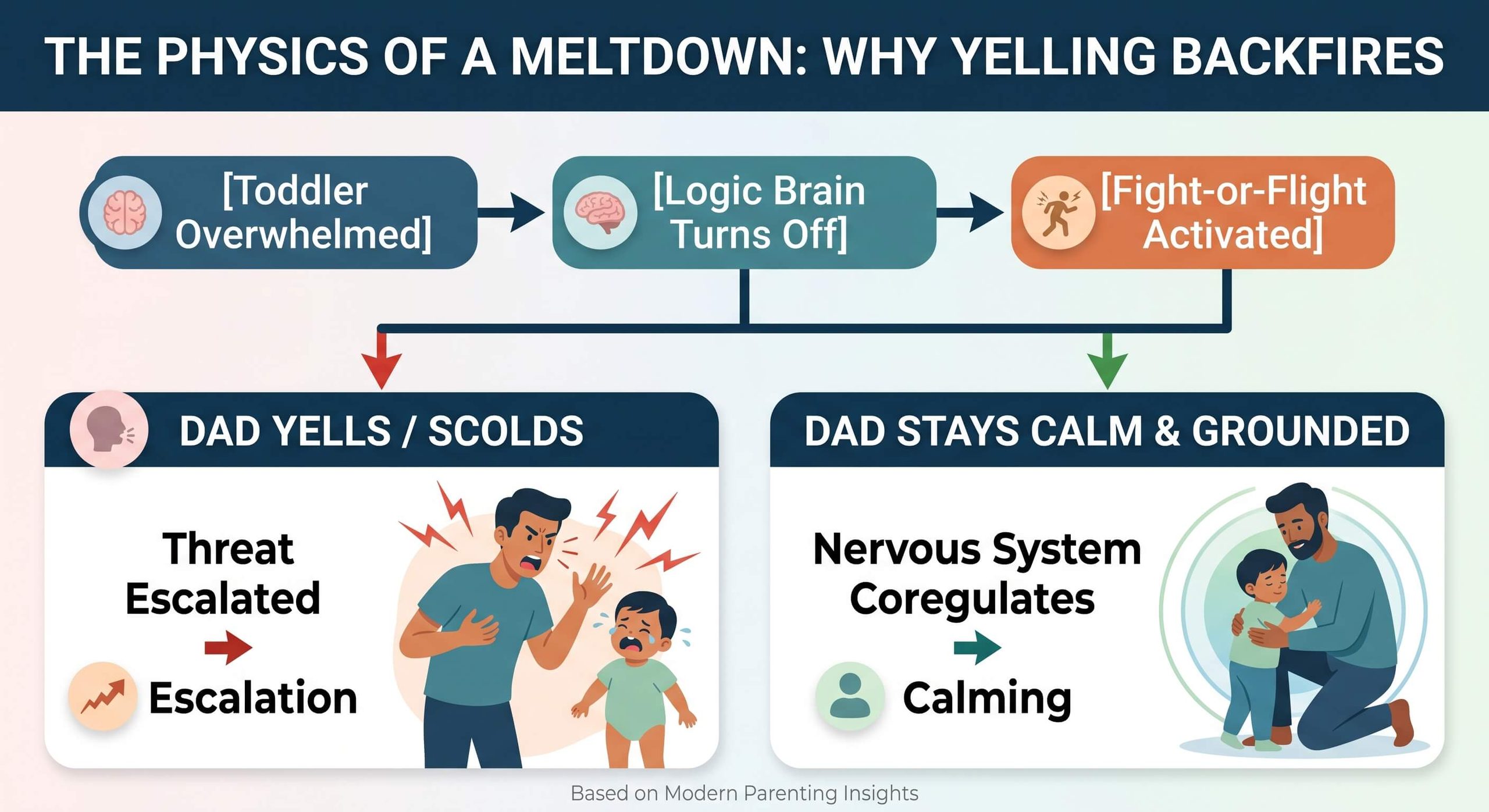
When you raise your voice, your toddler’s brain registers you as an active threat. Reasoning with a child during a meltdown is like trying to give driving instructions to someone while their car is upside down and on fire. Body first, brain second.
2. The 4-Step Dad Reset Routine
Instead of scrambling for what to say when your brain is fried, use this four-step physical framework:
Step 1: Drop Your Baseline (The 3-Second Body Hack)
Before you touch or address your child, adjust your physical body:
- Get on their level: Drop down onto one knee or sit on the floor. Standing over a screaming child instantly triggers an adrenaline response.
- Relax your jaw and shoulders: Unclench your teeth and drop your shoulders away from your ears.
- Exhale hard: Take one deep breath and let it out through your mouth.
Step 2: Use “Co-Regulation” Instead of Control
Toddlers do not possess the neurological hardware to self-regulate independently. They rely on co-regulation, a process detailed by the Child Mind Institute, where children borrow an adult’s calm physiological state to stabilize their own overwhelmed nervous system.
- Say nothing at first. Just sit near them.
- Offer a grounded physical presence: “I’m right here. You’re safe.”
Step 3: Deploy a Physical Reset (Get Out of the Head)
Logic fails during a tantrum, but bodily sensation grounds the nervous system. Using proprioceptive movement—like wall pushes or heavy stomping—helps release trapped motor energy. The American Academy of Pediatrics emphasizes that sensory and movement-based tools are among the most effective non-verbal de-escalation strategies for young kids.
- The “Volcano Breath”: Breathe in deep for 4 seconds, then blow out a huge gust of air like a volcano eruption. Reddit
- The Stomp & Heavy Hands: Stomp like a heavy dinosaur or press palms firmly against a wall to release trapped motor energy. Trailies
- Tactile Focus: Hand them a sensory object or give them a firm, squeezing side-hug if they allow physical contact.
Step 4: Validate First, Problem-Solve Later
Never negotiate or discuss rules until the physical storm passes. Once they catch their breath, name the emotion simply:
- “You really wanted the squares. It made you so angry when they got cut into triangles.”
- Keep your sentence under 10 words.
3. Real-World Dad Playbooks for Common Meltdown Triggers
| Situation | Common Mistake | The Non-Yelling Dad Alternative |
|---|---|---|
| Grocery Store / Public Tantrum | Threatening to leave or bribing with treats | Pick them up calmly without speaking, move to a quiet corner, and hold space until the crying eases. |
| Homework / School Standoff | Demanding they finish “or no screen time” | Acknowledge brain fatigue. Pause for 2 minutes using a heavy-pressure stretch or grounding exercise. |
| Bedtime Refusal | Repeating “Go back to sleep” with escalating frustration | Keep your voice at a low whisper. Sit beside the bed and give 3 firm arm squeezes to calm their sensory system. |
4. The Secret Tool: Tactical Co-Regulation Cards
When chaos hits at 7:00 AM, most parents freeze up because they can’t remember child-psychology scripts. This is why physical tools like the Trailies Big Feelings Deck have become extremely popular among dads.
Instead of relying on your exhausted brain to figure out what to say, you or your child simply pull a physical card from the deck.
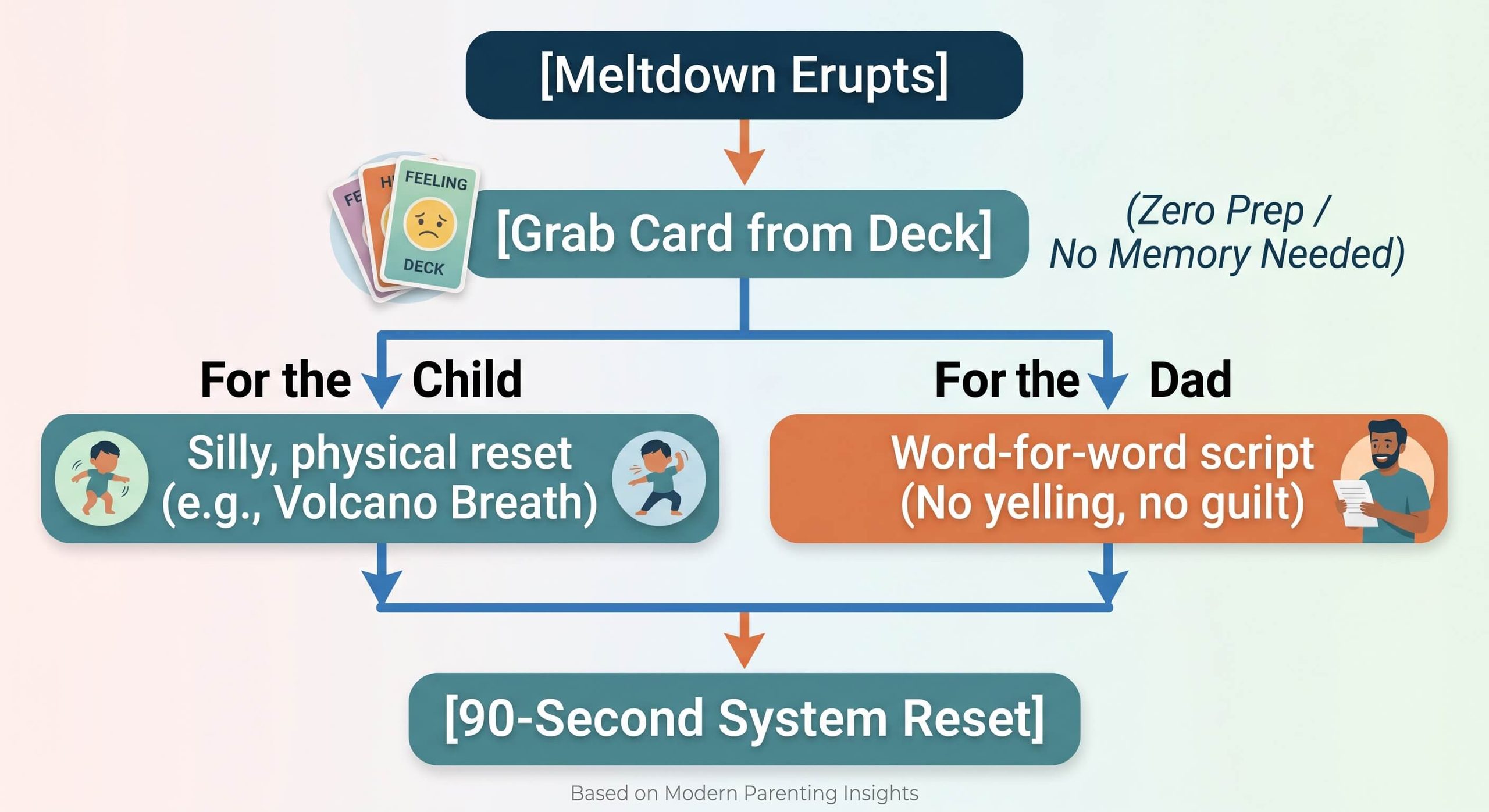
Having a physical prompt removes the power struggle entirely—your kid isn’t listening to you boss them around; they’re doing a fun 60-second activity with dad.
Frequently Asked Questions
Does the Trailies Big Feelings Deck work for tweens and older kids?
Yes. While designed primarily for ages 3 to 8, the physical and body-based grounding prompts (like heavy-muscle resistance and breathing resets) work effectively on 9- to 12-year-olds dealing with homework anxiety or frustration.
Is this approach effective for kids with ADHD or sensory sensitivities?
Yes. Children with ADHD or sensory processing differences often experience heightened fight-or-flight triggers. Because body-first prompts rely on proprioceptive input (deep pressure, stomping, heavy breathing) rather than verbal lectures, they tend to de-escalate sensory meltdowns far quicker than traditional talk-it-out methods.
How do I stay calm when my toddler’s screaming triggers my own anger?
Recognize that your anger is a physiological response to noise and loss of control. Give yourself permission to pause for five seconds before reacting. Lowering your physical posture and taking one long exhale slows your heart rate down enough to stop an angry reaction.
- Trailies Reviews: Is the Body Safety System Worth It for Parents?
- How to Stop Toddler Meltdowns Without Yelling (As a Dad Who Lost His Temper)
- The Modern Parent’s Guide: How to Best Help Your Unemployed Adult Child
- Baby Daybook Tracker: The Ultimate Offline Routine & Health Log for Parents
- The Ultimate Guide to Elegant Luxury Baby Girl Names with Rich Meanings